My Parents Divorced When I Was 26. Nobody Told Me It Would Be This Weird.

Updated: Oct 27
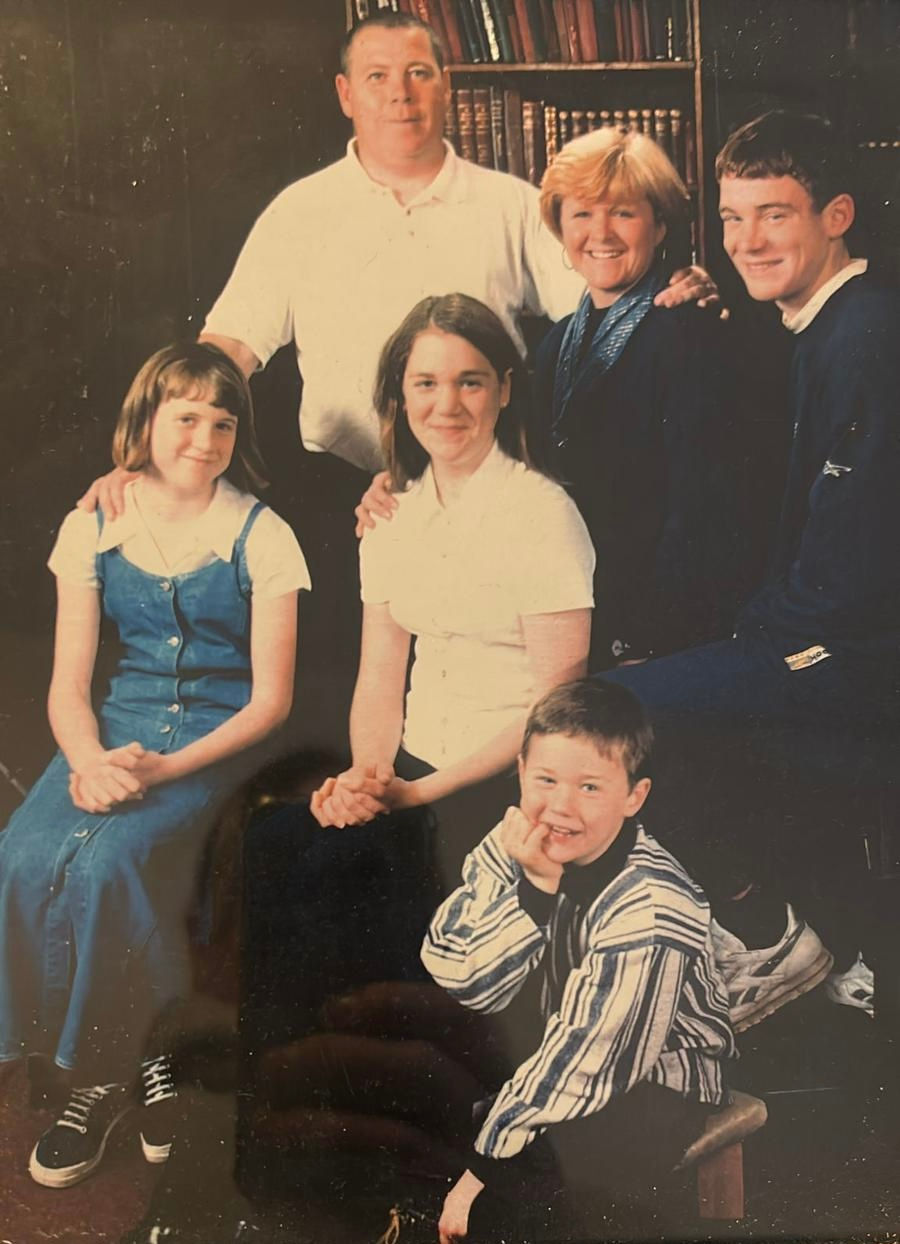
It's funny what stays with you. Nearly twenty years have passed since my parents divorced, but I can still remember the phone call as though it happened last week.
I was around 26, working on an oil refinery, and had managed to catch a few minutes on my lunch break when my phone rang. It was my mum, which was unusual because she rarely rang during working hours. I wasn't normally allowed to have my phone on me while I was on site, so I suppose it was fortunate that I happened to be available.
When I answered, she was crying.
"What's happened, Mum?"
"Your dad's left me."
Now, before you imagine some desperately emotional scene unfolding, I should probably explain that my mum had a slightly theatrical side. She was quite capable of turning a minor inconvenience into something resembling the closing moments of a Hollywood tragedy.
I remember her having a cold once and my dad asking whether she wanted anything. She slowly turned towards him and mouthed the word "water", as though she were delivering her final request before departing this world. My dad burst out laughing, which didn't help matters, and I think she eventually got up and fetched her own water.
So when she rang that afternoon, my first thought was that they'd had another falling-out. I'd ring my dad, he'd tell me she was being a drama queen, and by the time I'd finished work they'd probably be sitting in the living room watching television together.
They weren't a particularly argumentative couple, at least not in the way some families are. My dad was so laid-back that I sometimes wondered whether anything genuinely bothered him. My mum was generally quite calm too, although she could turn into an absolute lunatic if someone upset one of her children. She was fiercely protective of us, and God help anybody who offended her pack.
I rang my dad to find out what was going on.
"What the fuck's going on?"
Politely, of course.
He explained the situation from his perspective, and I immediately rang my mum back and gave her a shitload of abuse. I don't remember every word of that conversation, but I do remember how quickly I'd decided who was in the wrong. I'd heard one side of a complicated situation involving two people who'd been married for nearly three decades and decided, within the space of a lunch break, that I was qualified to pass judgment.
It wasn't my finest moment.
Looking back, I probably should have listened more and shouted considerably less, but there's something about family that can make otherwise sensible adults behave like complete idiots. I had my own home, a mortgage, a career and responsibilities, yet one phone call from my parents was apparently enough to turn me back into an emotional teenager.
The strange thing was that their separation wasn't actually a surprise. Their marriage had been struggling for years, and while I loved both of them enormously, I don't think anyone could honestly have described them as a couple who were still hopelessly in love.
My mum had a famous saying about their marriage.
"For twenty-seven years I've carried that man."
She'd announce it with such conviction that you'd think she'd spent almost three decades dragging him across Middle-earth. There was something very Gandalf the Grey about the way she'd deliver it, as though she'd survived an ancient battle that nobody else could possibly understand.
As a child, I thought it was hilarious. As I've got older, I've realised she probably had a point.
My dad worked hard, but he wasn't particularly interested in the grown-up side of running a household. He'd hand over his wages at the end of the week and my mum would deal with the bills, school uniforms, food shopping, holidays and everything else that needed organising when you're raising four children.
There was a practical reason for her looking after the money too. My dad had a gambling habit, and leaving the family finances entirely in his hands would probably have resulted in us personally funding William Hill's pension scheme.
I've written about his gambling before, and although I can joke about it now, there were consequences that weren't particularly funny. At the time, though, I didn't really think about who was dealing with those consequences. Dad went to work, Mum looked after the money, and the world kept turning.
It was simply how our family operated.
They'd discussed separating long before that phone call, but somehow they'd kept going. I suppose when you've spent the best part of your adult life raising children, running a home and trying to keep everything together, it's possible for the relationship itself to become secondary to everything else.
You stop being husband and wife in the way you once were and become two people sharing a house, paying bills and raising a family. Eventually, the children get older, the responsibilities change, and you're left looking at one another wondering what you've still got in common.

I can't say that's exactly how my parents felt because I wasn't inside their marriage. But from the outside, that's how it seemed.
I'd even said to my mum on more than one occasion that if they were ever going to separate, I hoped they'd wait until our Liam, my youngest brother, had grown up. He was still living at home when they eventually split, whereas the rest of us had long since flown the nest.
I worried about him more than I worried about myself. I was 26, after all, and had my own life to get on with. I assumed that whatever happened between my parents would be something they sorted out between themselves.
What I hadn't appreciated was that when your parents divorce, it doesn't just change their marriage. It changes the family that exists around it, including the bits you thought would always stay the same.
And to understand why that felt so strange, you probably need to know a little about the family we'd grown up in.
My dad was one of those enormous characters who seemed to know everybody. He could walk into a room full of strangers and leave having made several new friends, offended at least three people and somehow convinced everyone he'd had a wonderful time. He loved a joke, particularly one at somebody else's expense, and unfortunately my mum was often the person standing closest when inspiration struck.
I remember when we were kids, we'd pull into a petrol station or stop outside a shop and wait for my mum to get out of the car. As soon as she was far enough away, we'd start encouraging my dad to go after her.
He'd follow her inside, wait until there were plenty of people around and suddenly shout, "GET BACK IN THE FUCKING CAR!"
To anyone watching, it probably looked like the beginning of a domestic incident.
Meanwhile, we'd be sitting in the car absolutely crying laughing as my mum marched back towards us, ready to commit murder.
My dad would be laughing harder than anyone.
He also had a particular fondness for setting traps around the house. One of his favourites involved filling a washing-up bowl with water and balancing it between a slightly open door and the doorframe. He'd then sit in the living room with us and shout upstairs in a panic, telling my mum to come quickly because something had happened.
She'd come running downstairs, push the door open and get absolutely soaked.
We thought it was brilliant. My mum generally had a different opinion, particularly as it was the 1980s and practically every house had carpets that weren't designed to survive a small flood.
He didn't reserve this behaviour for the family home either.
He once went out for a Chinese meal with the extended family and apparently decided the restaurant carpet was filthy. Rather than quietly mentioning this to a member of staff, he wandered into a storeroom, found a hoover and started vacuuming the restaurant in the middle of the meal.
I think it might have been my nan's birthday, which makes it even better. Imagine arranging a lovely family celebration only to discover your son has appointed himself head of housekeeping.
On another occasion he was waiting at a bar and couldn't get served, so he decided to ring the pub while standing inside it. When the barmaid answered, he politely enquired whether there was any chance of somebody coming over to serve him.
She didn't appreciate his initiative.
He got barred.
These are the sorts of memories I have of my dad, and I could probably spend the rest of my life telling stories about him. He was funny, ridiculous, occasionally inappropriate and completely incapable of resisting an opportunity to take the piss.
As a child, I adored it.

As his wife, I imagine the novelty occasionally wore off.
One of the most extraordinary examples of this involved him telling my mum he was popping to the shop, only to disappear for the entire weekend.
To the Isle of Man.
With his brother and the football lads.
I genuinely don't understand how you make that transition. How does a trip for a loaf of bread suddenly involve crossing the Irish Sea? Did he have a bag packed? Did he stop at some point and consider that perhaps he ought to mention the change of plans to his wife?
There are so many questions I'd love to ask him.
Even now, the thought of him casually disappearing to the Isle of Man makes me laugh. I can picture him coming home a couple of days later with some completely inadequate explanation, wondering what all the fuss was about.
But there's another side to that story that I never really considered as a child.
My mum would have been at home with four children, wondering where her husband had gone. This was before everyone had mobile phones, when you couldn't simply look at somebody's location or send them a message asking whether they'd accidentally boarded a ferry.
And while I'm sitting here laughing about it nearly forty years later, she was the one left dealing with whatever happened while he was away.
That's something I've come to understand about my dad as I've got older. The very things that made him such wonderful company could also make him incredibly difficult to live with.
He was a brilliant father to me. He managed several of the football teams I played for, and we spent countless hours together travelling to matches, training and doing all the things fathers and sons do around football. We were close, and some of the happiest memories of my childhood involve spending time with him.
But being his son and being his wife were two very different experiences.
I got the laughter, the football and the ridiculous adventures. My mum got those things too, but she also had to deal with the gambling, the responsibilities and the uncertainty that sometimes came with being married to him.
I saw the entertainer. She had to live with the entire performance.
My mum, meanwhile, was the person quietly holding much of the family together. She was affectionate, protective and completely devoted to her children, although she had plenty of her own peculiarities.
My nan used to tell a story about when I was a baby. Apparently, my mum was forever kissing the top of my head, to the point where my nan eventually told her to stop because I'd have no hair left.

She also had a remarkable ability to buy presents that seemed better suited to somebody else.
I remember getting a CD player for Christmas or my birthday. I hadn't particularly asked for one, but I was grateful enough until I came home from school the following day and discovered it had been relocated to the living room, where my mum was happily listening to Fleetwood Mac on it.
She was absolutely delighted with my present.
Then there was the Easter tracksuit.
For anyone who didn't grow up in Liverpool, getting new clothes for Easter was practically a religious obligation. You needed a decent tracksuit and a pair of trainers, preferably something that wouldn't result in you being absolutely destroyed by your mates.
My mum decided she'd surprise me and ordered a tracksuit from the Littlewoods catalogue.
When it arrived, she was made up with herself.
Unfortunately, it was what we used to call a slippy tracky, which was bad enough, but it also had Ryan Giggs's signature across the chest.
Ryan fucking Giggs.
There was absolutely no chance I was wearing that outside the house.
I kicked off, my mum lost the plot, and a perfectly nice gesture turned into an argument about why I was an ungrateful little shit.
Looking back, she was probably right about that one.
She was also quite skilled at delivering messages without actually saying anything. When I was about twenty, she bought me and my two sisters a suitcase each for Christmas. By February, I think we'd all moved out.
Whether that was the intention or not, we certainly took the hint.
I was the first to leave, and the others followed. Eventually, only Liam was still at home, and I suppose we all assumed our parents would just carry on doing what they'd always done.
Dad would wind Mum up, Mum would threaten to batter him, Sunday dinners would happen, and everything would continue much as it always had.
But life doesn't work like that, does it?
I remember my mum having a hysterectomy around the time I'd moved out. It's one of the few occasions I can remember being genuinely frightened about her health, and I visited her in hospital every day.

When she was discharged, she almost immediately tried to get back to normal, doing all the things she'd always done. She ended up back in hospital.
I sometimes wonder whether something changed in her after that operation. I might be completely wrong, and perhaps I was simply getting older and beginning to notice things I'd previously taken for granted, but I remember her seeming different for quite a while afterwards.
For years she'd been the person who looked after everybody else, and suddenly there she was in a hospital bed, needing other people to look after her. I don't think I'd ever really considered that my mum might be vulnerable, or tired, or struggling with things that had absolutely nothing to do with being our mum.
I was starting to recognise the person underneath the role she'd played for so long, even if I didn't fully understand what I was seeing.
When my parents eventually divorced, one of the biggest changes wasn't actually anything either of them did. It was what happened to my sister.
Without anybody announcing it, she seemed to inherit many of the responsibilities my mum had previously carried.
My dad leaned heavily on her, and before long her house became the place where the family gathered. Sunday dinners, Christmas dinners, birthdays and all the occasions that had previously revolved around our parents' house gradually moved to hers.
It was as though she'd become the head of the family without anyone bothering to ask whether she fancied the job.
And in some ways, she became a mother figure to my dad.
I know that sounds strange, but it's probably the best way I can describe it. My dad was perfectly capable of working hard and looking after himself in many respects, but when it came to the domestic side of life, he'd become accustomed to somebody else taking care of things.
For years, that person had been my mum. Once she was no longer there, my sister quietly stepped into the space she'd left behind.
I don't remember us ever sitting down and talking about it. We just carried on turning up for Sunday dinner, eating the food and enjoying the fact that everybody was together.
It's funny how families do that. Someone stops carrying a responsibility and somebody else picks it up, often without anyone even acknowledging that it's happened.
I think about that now and wonder whether we ever properly appreciated what my sister was doing. She wasn't simply providing somewhere for us to eat. She was giving us somewhere that still felt like family when the place we'd always associated with it no longer existed in quite the same way.
And while all of that was happening, my mum and dad were doing something I hadn't really prepared myself for.
They were starting new lives.

There's something deeply uncomfortable about discovering that your parents have romantic interests.
As far as I was concerned, my mum was my mum. She'd spent years raising four children, organising everybody's lives and generally being available whenever any of us needed something. Suddenly she was going out, meeting people and having relationships with men we'd never heard of.
I wasn't particularly impressed by this development.
For a while, it felt as though she'd disappeared into another life. The woman who'd always seemed to put everybody else first was suddenly doing things for herself, and I didn't really know what to make of it.
I don't know whether she was enjoying her freedom, making up for lost time or simply trying to discover who she was after spending so much of her adult life being a wife and mother.
Perhaps it was all of those things.
But I don't think I gave much consideration to what she might have wanted. I'd always known her as Mum, and somewhere in my head I'd assumed that was the job she'd signed up to do forever.
Then there were the men she started seeing, some of whom made me question whether she'd completely lost the plot.
The first was an unpleasant character none of us particularly liked. He was aggressive, short-tempered and the sort of man who could make you uncomfortable without necessarily saying very much.
Unfortunately, our concerns were justified. He eventually physically assaulted my mum, something I still find difficult to think about without getting angry.
There's nothing remotely funny about that part of the story. He was a bully and a shithouse, and I'm glad he eventually ended up in prison.
My mum deserved better.
After him came a bloke who was apparently a very successful company director, except it turned out he wasn't a director at all. He was a con man who tried to persuade my mum to invest in a business that didn't exist.
You couldn't make it up.
Then there was Dog Man.
I can't tell you an enormous amount about Dog Man, mainly because the family had decided he was Dog Man and that was apparently all the information anyone needed.
He had a dog.
We weren't an especially imaginative bunch.
Eventually, after what felt like a fairly extensive and occasionally alarming recruitment process, my mum met someone who genuinely made her happy.
They're still together today, and he's a good man. They enjoy one another's company, and I can see how happy she is with him, which is ultimately all I could ever want.
I was slightly less enthusiastic when I discovered he was only three years older than me. There's something unsettling about your mum having a partner who is practically in your own age bracket, although I imagine it was equally strange for her when she met his mum and discovered they were the same age.
But they're happy, and we get along well.
He's quite a big bloke too, and looks like he can handle himself, so if we ever did fall out I'd probably need to eat a banana before attempting to fight him.
Fortunately, it hasn't come to that. Yet.
My dad was also meeting people, and unsurprisingly his romantic adventures weren't particularly straightforward either.
He had a relationship with a Polish woman who was, to put it politely, mad as a box of frogs. Her daughter was equally chaotic, and the whole situation had one of those strange atmospheres where you know something isn't quite right but can't necessarily explain why.
That relationship didn't last particularly long.
He then met another woman who was apparently known locally as Bonkers. I don't know her well enough to comment on whether the nickname was justified, but I can't imagine it's an especially promising introduction when the local community has collectively decided that's what you're called.
Eventually, he met a woman who ran a café, and before long my dad had somehow found himself working in the catering industry.
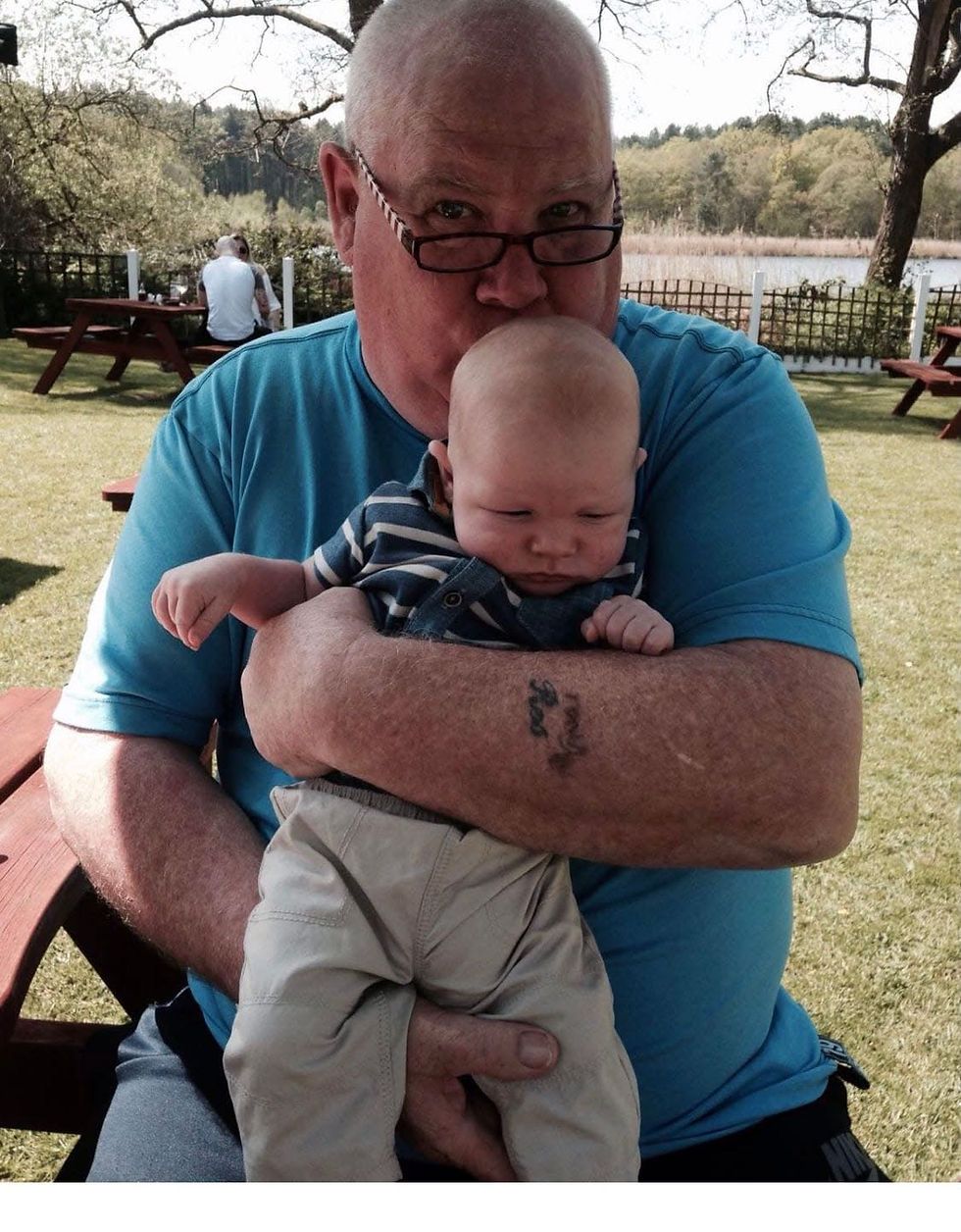
Now, I loved my dad, but a man who could disappear to the Isle of Man while supposedly popping to the shop probably wasn't the first person I'd have selected to run a business where customers expect their food to arrive within a reasonable amount of time.
On the first day, the electricity went off.
Most people would probably have apologised, closed the café and accepted that they'd had a disastrous start.
Not my dad.
He decided to carry on serving Sunday dinners in the dark, using a torch to work out what he was doing.
I wish somebody had filmed it because I can picture the entire thing. There he was, wandering around with plates of roast dinners, probably laughing at the situation while everybody else wondered how on earth they'd ended up there.
He had an extraordinary ability to find himself in completely ridiculous situations and behave as though they were the most normal thing in the world.
Not long before he died, he and this woman bought a narrowboat and lived on it together for several months.
I can tell you now, with absolute certainty, that there is no amount of money on this earth that would have convinced me to share such a confined space with my dad.
I loved the man enormously, but I wouldn't have lasted a week.
I can only imagine what living on a narrowboat with him must have been like, and I wasn't entirely surprised when the relationship eventually deteriorated.
I suppose what struck me most during those years was how similar my parents were to the rest of us, despite having spent my childhood assuming they knew everything.
They wanted companionship. They wanted affection. They wanted somebody to share their lives with, and sometimes they made questionable decisions while trying to find it.
I'd always assumed that by the time you reached their age, you'd have most of life figured out.
Apparently not.
And the more I watched them trying to navigate relationships, the more I started to appreciate just how little I'd understood about their marriage in the first place.
When you're a child, you see your parents through a very particular lens. You know whether they make you laugh, whether they turn up for your football matches, whether they help you when you're struggling and whether there's food on the table when you get home.
You don't necessarily see the disappointments that accumulate between two people over twenty-seven years. You don't hear every conversation that takes place after you've gone to bed, or understand the compromises somebody makes to keep the family together.
I knew my dad could be a pain in the arse, but I didn't know what it felt like to be married to him. I knew my mum could be difficult sometimes, but I didn't know what she'd given up or put aside during the years she spent looking after us.
And perhaps that's why I'd been so quick to take sides on the day she rang me.
I'd made a judgment about a marriage I only understood from the outside.
A few years after the divorce, something happened that surprised me more than almost anything else.
My mum and dad became friends again.
Not in a romantic way, and certainly not because they'd realised they'd made a terrible mistake and wanted to get back together. Their marriage was over, and I don't think either of them had any intention of revisiting it.
But somehow, the anger seemed to settle, and they found a way to get along.
I think that's rather lovely when you consider everything they'd been through.
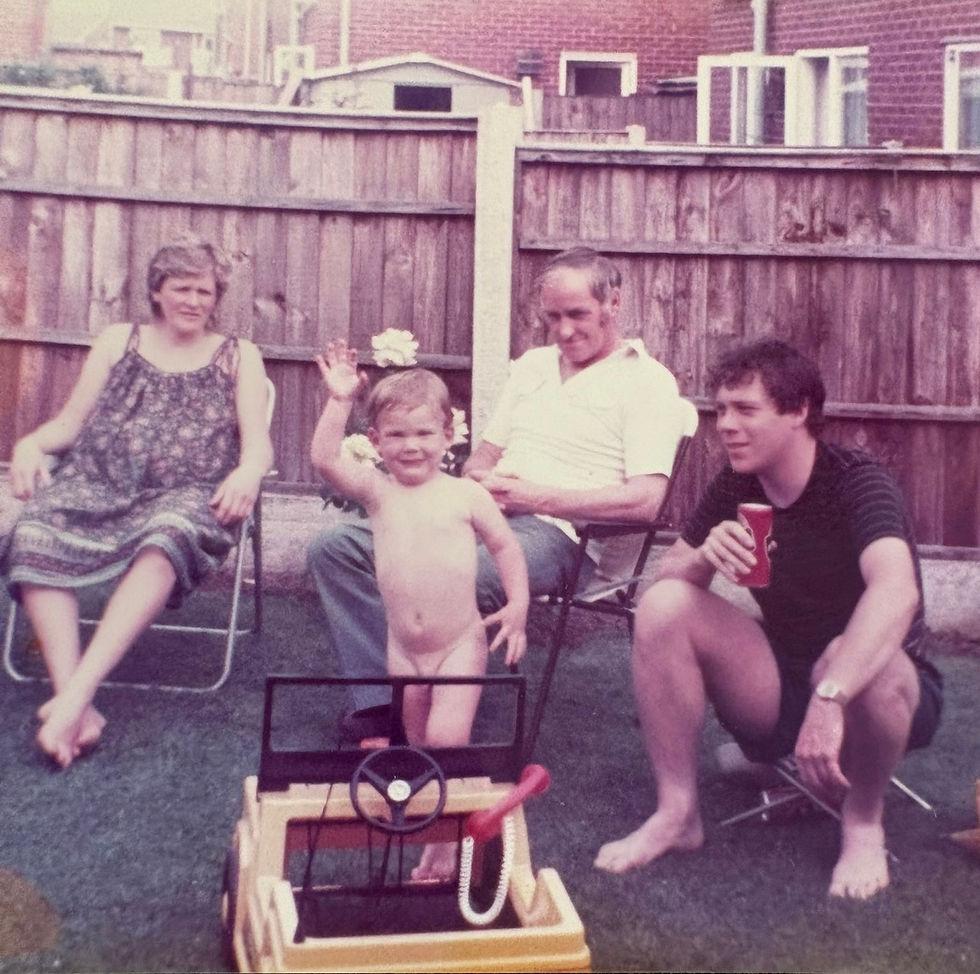
They'd spent nearly three decades together, raised four children and accumulated a lifetime of shared memories. Football matches, Christmas mornings, family holidays, arguments, laughter and all the ordinary little moments that don't seem particularly important until you look back and realise they made up most of your life.
Their marriage hadn't worked out in the end, but I don't think that meant those years had been wasted.
We sometimes talk about relationships ending as though the final chapter somehow decides whether the entire story was worth reading. If two people divorce, we assume someone must have failed, or that the love they once shared couldn't possibly have been real.
But I don't think it's that simple.
People change. Relationships change. Sometimes the things that once brought two people together aren't enough to keep them together forever, particularly when they've spent years raising children and putting everybody else's needs ahead of their own.
That doesn't erase the good times.
It doesn't mean there was never any love.
And it certainly doesn't mean the family they created was a mistake.
My parents managed to reach a point where they could be friends again, and I think I appreciated that more as I got older.
My dad has since passed away, and losing him inevitably changed the way I look back on those years.
I still remember him as the larger-than-life character who made everybody laugh. The bloke who managed my football teams, hoovered restaurant carpets, rang pubs while standing at the bar and somehow managed to turn a trip to the shop into a weekend in the Isle of Man.
Those memories are precious to me, and they always will be.
But I can also recognise that he wasn't always a good husband.
There was a time when admitting that would have felt almost disloyal, as though acknowledging his faults somehow diminished everything wonderful about him.
It doesn't.
I can love my dad enormously and still recognise that he got things wrong. I can laugh at his ridiculous behaviour while understanding that the same behaviour probably made my mum's life considerably more difficult than it needed to be.
I can recognise that he gave me a wonderful childhood without pretending he gave my mum a wonderful marriage.
And I can appreciate my mum differently now, not because I love her any more than I did when I was younger, but because I understand more about the woman underneath the role she played in our lives.
The woman who raised four children, managed the household, endured my dad's nonsense and still found the energy to kiss the top of my head enough times to make my nan worry I'd go bald.
She wasn't perfect either.
None of us are.
But I think I spent so many years assuming she'd always be there, always know what to do and always put everyone else first that I forgot she might have her own hopes, frustrations and disappointments.
She was my mum, and I'd never really considered that she was also just a person trying to work out her own life.
I started writing this thinking it would be an article about my parents getting divorced, but the more I've thought about it, the less interested I am in the divorce itself.
What stays with me is everything that changed around it. My sister quietly becoming the person who kept the family together. The strange procession of new partners. The family home no longer being the place where everybody automatically gathered. And watching my parents make decisions that occasionally left me wondering whether they had any idea what they were doing.
The truth is, they probably didn't always know.
And why should they?
Nobody hands you a set of instructions for being married for twenty-seven years. Nobody explains how you're supposed to feel when your children grow up and leave home, or what happens when the relationship you've built your adult life around comes to an end.
You just have to figure it out, much like everybody else.
I was 26 when my parents divorced, and I thought I understood enough about life to know who was right and who was wrong.
I didn't.
I understood my childhood. I understood my relationship with my mum and dad. But I didn't understand their marriage, and I certainly didn't understand everything either of them had been carrying during those years.
It took me a long time to appreciate that loving someone doesn't mean you have to pretend they were perfect, and recognising their faults doesn't mean you love them any less.
My mum eventually found happiness with someone else. My dad continued being my dad until the day he died, funny, infuriating, completely unpredictable and responsible for some of the best memories I'll ever have.
And somehow, after everything, they managed to become friends again.
I'm glad they did.
I still wish I could sit down with my dad and ask him a few questions about life, marriage and the things he might have done differently. Whether he ever realised how much my mum did for us, whether he had any regrets, and whether he understood just how difficult he could be sometimes.
Knowing him, he'd probably make a joke, laugh at himself and change the subject.
And I'd probably end up laughing with him.
But once we'd got all the serious stuff out of the way, there's one question I'd still need answering.
"Dad, how the fuck did you go to the shop and end up on the Isle of Man?"
Keep reading
Before you go
If this one stayed with you, there is more where it came from. Subscribe for new stories and the occasional update, and download Leave It Here, a free four page journal.


Comments